
Climate change is no longer a distant threat - the recent extreme heatwaves experienced by the UK is driving home the fact that it is already here. Summers are becoming hotter, heatwaves are lasting longer, and urban areas are experiencing temperatures significantly higher than the surrounding countryside. As the climate continues to warm, one of the simplest, most effective, and most affordable solutions is also one of the oldest: planting more trees.
PeCAN volunteer Sarah Garcia tells us more...
The Growing Heat Problem
In its latest Independent Assessment of UK Climate Risk, The Climate Change Committee states that: 'Increasingly extreme and frequent heatwaves are the greatest risk to health in the UK from climate change'. More than 2,700 people are estimated to have died from heat-related causes during the record-breaking May and June 2026 heatwaves in England and Wales, according to a new analysis led by researchers from the London School of Hygiene & Tropical Medicine (LSHTM), Imperial College London and the Met Office.
The UK has already experienced record-breaking temperatures in recent years, with recorded temperatures exceeding 40°C for the first time in history. The last decade has been warmer than any previous decade on record, and summers we once considered exceptional are becoming the norm. Summer 2026 has already broken records with a new maximum temperature record for June. Scientists predict that these extreme weather events will become more frequent as global temperatures continue to rise.

Trees: Nature's Air Conditioning
Towns are particularly vulnerable to rising temperatures because of the urban heat island effect. Roads, pavements, brick buildings, and concrete, absorb heat throughout the day and release it slowly at night, making towns much warmer than nearby rural areas. This not only makes life uncomfortable but also increases health risks, particularly for older people, young children, and those with underlying medical conditions. The late June heatwave overwhelmed hospitals, disrupted travel and forced schools to close.
Urban trees provide a natural cooling system. They create shade that reduces the temperature of streets, parks, homes, and public spaces. Through a process called transpiration, trees also release water vapour into the atmosphere, cooling the surrounding air naturally.
Research has shown that tree-lined streets can be several degrees cooler than those without trees. During heatwaves, this difference can improve public comfort, reduce heat-related illnesses and even save lives.
The Energy and Climate Intelligence Unit says that expanding and maintaining urban tree canopies offers one of the most effective long-term ways of improving resilience to extreme heat, while also delivering wider benefits for biodiversity, air quality and carbon storage:
Planting trees can over time help to bring down temperatures in the buildings they shade, and give more vulnerable people hope of being able to leave their homes into less risky temperatures to do things like shop and visit the GP. The UK is way behind European counterpart’s [in percentage of urban tree cover].
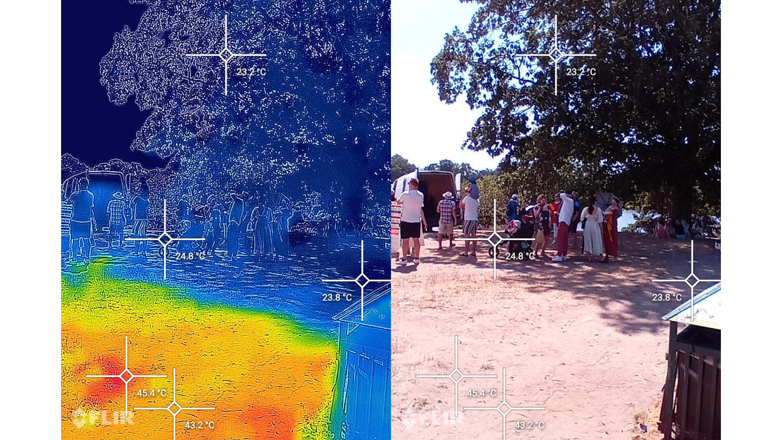
Petersfield Heath 12th July 2026 - 23°C in the shade, 45°C in the sun
Improving Air Quality
Trees do far more than cool our towns. They absorb harmful pollutants such as nitrogen dioxide and fine particulate matter produced by traffic and industry. Cleaner air means healthier communities, reducing respiratory illnesses such as asthma and improving overall public health.
Combating Climate Change
Trees also capture carbon dioxide, the main greenhouse gas responsible for climate change. While tree planting alone cannot solve the climate crisis, it is an important part of reducing the UK's carbon footprint.
Supporting Wildlife
Urban development has reduced natural habitats for birds, insects, and other wildlife. Planting more native trees creates vital habitats and food sources for local wildlife, helping biodiversity recover.
Better Places to Live
Tree-lined streets are also more attractive, encouraging walking and cycling instead of driving. This contributes to healthier lifestyles and helps reduce traffic congestion and pollution.
Economic Benefits
Investing in urban trees can also make financial sense. Cooler towns reduce the demand for air conditioning, lowering energy costs and greenhouse gas emissions. Trees help absorb rainfall, reducing pressure on drainage systems and lowering the risk of flooding after heavy storms.

A Greener Future
Climate change presents one of the greatest challenges the UK, and the world, has ever faced. While reducing carbon emissions remains essential, adapting our towns to a warmer climate is equally important.
Planting more trees is a practical, cost-effective investment that delivers lasting environmental, social, and economic benefits. They cool our streets, clean our air, support wildlife, reduce flood risk, and create healthier, happier communities.
If we want our towns to remain safe and pleasant places to live as temperatures continue to rise, we must start planting more trees today. The best time to plant a tree was decades ago. The second-best time is now.
Did you know that members of the public can request that Hampshire County Council plant trees on the highway outside their homes where suitable verges exist? You can do this by filling out a simple form here.
Keep an eye out for PeCAN's upcoming projects and sign up to our monthly newsletter to find out what you can do to help combat climate change.