
Richard Teeuw, Professor of Geoinformatics at the University of Portsmouth - and PeCAN volunteer - presents images of Petersfield (and Portsmouth) during some of the 2026 heatwaves.
These images illustrate some of the extreme surface temperatures, as well as highlighting the relative cooling value of trees and areas of water.

The importance of shade in built-up areas
In the thermal InfraRed image of Petersfield Market Square, most of the paving stones are around 50°C, while the roofs of the buildings on the right are 60°C to 70°C. On the left, the Post Office frontage is in shade and only about 30°C, as is the large tree on the Square and the shaded area beneath it.

The cooling effects of watercourses and vegetation
In the thermal image of the Tilmore Brook, central Petersfield, the covered walkway next to the Waitrose supermarket is 20°C to 30°C and the vegetated stream channel is 10°C to 20°C. In contrast, the tarmac of the Rams Walk car park on the right is 50°C to 60°C, although areas with trees and their shade are significantly cooler at 20°C to 30°C.

Hotspots and cool places on Petersfield Heath
This photo below taken close to the music marquee at the July Eco Fair, near the Heath playground area. Note the contrast between the surface temperatures in the shaded area of the large tree (23°C to 25°C) and the sunlit ground (45°C to 48°C).

Heatwaves, heat stress and schools
The University of Portsmouth has installed temperature sensors inside and outside of many schools in the city, as part of a project to collect data for assessing heatwave impacts and provide guidance on cost-effective ways of improving climate resilience.
Here’s a view of a school playground in Portsmouth – typically a lot of tarmac, concrete and brick surfaces – on a July heatwave afternoon. The sunlit playground surface is 53°C to 55°C. In contrast, the shade area under the tree is 33°C to 34°C. and the tree canopy is even cooler, down to 30°C, due to the cooling effect of evapotranspiration by the trees thousands of leaves.
You can find out how vulnerable your area is to extreme heat by searching your post code on the map at this link.
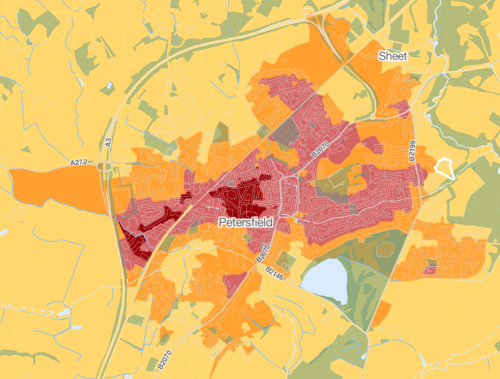
Image from BBC News map
The thermal images above offer a stark illustration of how poorly prepared some of our urban and suburban areas are for the increasingly extreme and numerous heatwaves predicted in the coming years. They also raise the question of what more we can do to prepare our towns and cities to be more resilient. When PeCAN posted a selection of these images on social media we received numerous comments from our community and Petersfield residents advocating overwhelmingly for more trees in particular, plus green roofs and walls, pedestrianisation (space for nature and active travel), and man-made canopies and shading.
PeCAN is hoping to launch an initiative focussed on adaptation and resilience, preparing Petersfield for both a hotter and more extreme future. If you would like to be part of the conversation please join us in person at our weekly Eco Cafe or monthly PeCAN at the Pub sessions, come along to one of our events, volunteer with us, or contact us via email.
Together we can ensure our town and our community is ready and resilient.