The way we heat and power our homes is changing. As gas and oil-fired heating systems are gradually replaced by cleaner, electric-based alternatives, what will this mean for our homes — and what are the wider implications for homeowners and communities?

A cleaner power source
The electricity supplied to our homes through the national grid is targeted to be 95% clean by 2030, under the Government’s Clean Power 2030 Action Plan. This is an important part of the UK’s longer-term ambition to decarbonise heating, with homes increasingly powered and heated by electricity while gas and oil are gradually phased out.
We can also generate our own electricity. Solar PV panels are now a well-established option, while newer, smaller-scale plug-in solar systems are making it easier for more households to generate some of their own power.

A huge task – both locally and nationally
According to the 2021 Census, more than 79% of homes in East Hampshire rely on mains gas, oil or LPG for heating.
Moving away from our reliance on fossil fuels is a major challenge, but it also presents a significant opportunity. Improving the way we heat and power our homes can deliver benefits in terms of energy efficiency, running costs and energy security, while also reducing carbon emissions and creating healthier, more comfortable homes.
A recent progress report from the Climate Change Committee highlighted the financial benefits of moving away from fossil-fuel heating and petrol or diesel vehicles. It stated:
Following the recent increase in fossil fuel prices, bills have increased almost four times more for a typical household with a gas boiler and a petrol car, compared to a household with a heat pump and an EV. For a rural household with an oil boiler and a diesel car, the increase is 10 times more.
So, what does an all-electric home look like?
An all-electric home could combine several technologies to create a highly efficient and flexible energy system.
Electric heating could be provided by heat pumps, thermal batteries or high-heat-retention storage heaters, depending on the property and its individual needs.
This could be combined with solar PV and battery storage, allowing homeowners to generate and store their own electricity and use more of it when they need it. With the right combination of technologies, some homes could potentially achieve net-zero energy use over the course of a year.
A flexible electricity tariff can add another layer of savings, giving homeowners the opportunity to use cheaper, cleaner off-peak electricity to heat their homes, charge batteries and power appliances.
As more and more of us are switching to electric vehicles (EV), home charging can be significantly cheaper than relying on public charging networks, particularly when charging from your own solar generation or during cheaper off-peak periods. In the future, vehicle-to-grid technology could also allow EV owners to send stored electricity back to the home or grid when it is most valuable.
The home of the future is not simply electric — it is flexible, efficient and connected.
By combining renewable generation, energy storage, smart tariffs, low-carbon heating and EV charging, our homes can become active participants in the energy system rather than simply consumers of electricity.
The transition will be a huge undertaking, particularly in rural areas such as East Hampshire, but it also represents an opportunity to make our homes more efficient, more resilient and cheaper to run, while helping to reduce the carbon emissions that contribute to climate change.
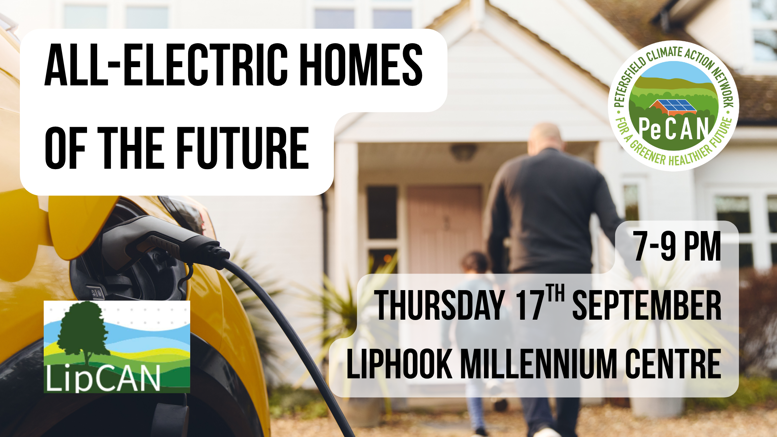
To further explore the future of our homes and learn how we can embrace new ways of thinking, come to our upcoming talk in Liphook, on Thursday 17th September, with industry expert and guest speaker Bean Beanland.
Find out more and book your place here.